



HVAC Engineering: Creating Comfortable, Healthy and Energy-Efficient Buildings
Category: HVAC Engineering
Introduction
HVAC, which stands for Heating, Ventilation and Air Conditioning, is one of the most important building services in modern residential, commercial and industrial facilities. HVAC systems are designed to maintain comfortable indoor temperatures, control humidity, improve air quality and provide proper ventilation.
A well-designed HVAC system not only improves occupant comfort but also contributes to energy efficiency, indoor air quality and the overall performance of a building. Professional HVAC engineering ensures that systems are properly designed, installed, operated and maintained.
What Is HVAC?
HVAC refers to a combination of technologies used to control the temperature, humidity, air movement and air quality inside a building. These systems can range from small residential air conditioning units to large centralized systems used in hospitals, shopping malls, offices, hotels and industrial facilities.
HVAC engineering involves the design and integration of heating, cooling, ventilation, air distribution, filtration and control systems to meet the specific requirements of a building.
Importance of HVAC Systems
HVAC systems play an important role in maintaining a comfortable and healthy indoor environment. In commercial and industrial buildings, proper HVAC operation can also protect equipment, products and processes from unsuitable temperature and humidity conditions.
- Maintains comfortable indoor temperatures
- Improves indoor air quality
- Provides adequate ventilation
- Controls indoor humidity
- Removes unwanted heat and pollutants
- Supports occupant health and comfort
- Protects sensitive equipment and processes
- Improves overall building performance
Main Components of an HVAC System
1. Heating Systems
Heating systems are used to increase indoor temperature during cold conditions. Depending on the building and climate, heating may be provided using boilers, heat pumps, electric heaters or other heating equipment.
2. Cooling Systems
Cooling systems remove heat from indoor spaces to maintain the desired temperature. Common cooling equipment includes chillers, air conditioning units, condensing units and heat pumps.
3. Ventilation Systems
Ventilation provides fresh outdoor air and removes stale or contaminated indoor air. Proper ventilation is essential for maintaining good indoor air quality and reducing the concentration of unwanted pollutants.
4. Air Handling Units
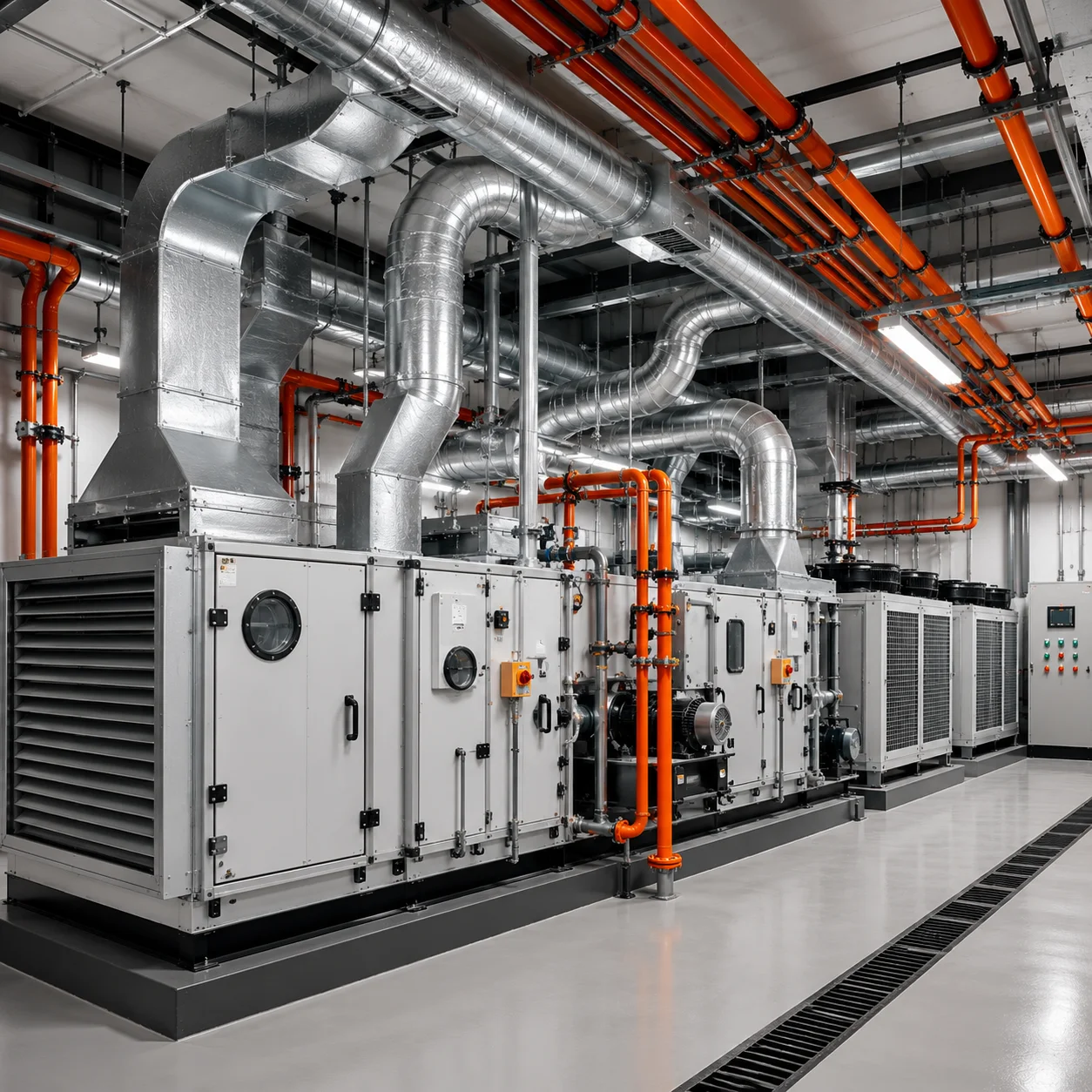
Air Handling Units, commonly known as AHUs, are used to condition and distribute air throughout a building. They may include filters, cooling or heating coils, fans, dampers and control systems.
5. Ductwork
Ductwork distributes conditioned air between HVAC equipment and different areas of a building. Proper duct sizing and installation are important for achieving efficient airflow and minimizing pressure losses.
6. Pumps and Fans
Pumps circulate chilled water, hot water and other fluids, while fans move air through ducts and equipment. Selecting the correct capacity and operating these components efficiently can significantly affect overall HVAC energy consumption.
HVAC System Design
HVAC design begins with understanding the requirements of the building. Engineers evaluate factors such as building size, occupancy, climate, insulation, equipment loads, ventilation requirements and operating schedules.
The goal is to design a system that provides the required indoor conditions while maintaining energy efficiency and reliability. Proper equipment selection, ductwork design, airflow calculations and control strategies are important parts of the design process.
Indoor Air Quality and HVAC
Indoor air quality is an important function of HVAC systems. Buildings can accumulate dust, odors, airborne particles and other pollutants when ventilation and filtration are inadequate.
HVAC systems can help improve indoor air quality through proper ventilation, filtration, air circulation and humidity control. Regular cleaning and maintenance of filters, coils and air handling equipment are also essential.
Energy Efficiency in HVAC Systems
HVAC systems can represent a significant portion of a building's energy consumption. Efficient HVAC design and operation can therefore have a major impact on operating costs.
Energy efficiency can be improved through the use of high-efficiency equipment, variable speed drives, efficient motors, smart thermostats, automated controls and properly maintained systems.
- Use energy-efficient HVAC equipment
- Optimize equipment operating schedules
- Maintain clean air filters and coils
- Use variable speed drives where appropriate
- Minimize unnecessary heating and cooling
- Monitor energy consumption
- Regularly inspect HVAC equipment
HVAC Maintenance
Regular HVAC maintenance helps maintain system efficiency, reliability and service life. Neglecting maintenance can result in reduced performance, higher energy consumption and unexpected equipment failures.
Preventive Maintenance
Preventive maintenance includes regular inspection, cleaning, filter replacement, lubrication, electrical checks and performance testing. These activities help identify potential problems before they result in system failure.
Corrective Maintenance
Corrective maintenance is performed when an HVAC component or system develops a fault. Prompt diagnosis and repair can reduce downtime and prevent further damage to equipment.
HVAC and Building Management Systems
Modern buildings increasingly use Building Management Systems, or BMS, to monitor and control HVAC equipment. BMS technology can provide information about temperature, humidity, equipment status, energy consumption and operating conditions.
Automated HVAC controls can help optimize system operation, improve occupant comfort and reduce unnecessary energy use.
Benefits of Professional HVAC Engineering
- Improved occupant comfort
- Better indoor air quality
- Improved energy efficiency
- Reduced operating costs
- Reliable HVAC system performance
- Longer equipment service life
- Reduced unexpected breakdowns
- Better control of temperature and humidity
- Improved building performance
Future of HVAC Engineering
The future of HVAC engineering is focused on energy efficiency, sustainability, automation and intelligent building management. Smart sensors, advanced controls, energy-efficient equipment and data-based maintenance are helping buildings operate more efficiently.
As demand for sustainable and high-performance buildings continues to grow, HVAC engineers will play an increasingly important role in reducing energy consumption while maintaining healthy and comfortable indoor environments.
Conclusion
HVAC engineering is a vital part of modern building infrastructure. A properly designed and maintained HVAC system provides thermal comfort, ventilation, humidity control and improved indoor air quality.
By combining efficient equipment, proper system design, smart controls and regular maintenance, building owners can reduce energy consumption, lower operating costs and improve the reliability of their facilities.
Investing in professional HVAC engineering is therefore an important step toward creating comfortable, healthy, energy-efficient and sustainable buildings.